What Are System Controls?
Have you ever tried to adjust the temperature in your home, with no effect? It’s easy to assume the issue is with the furnace or air conditioner, but sometimes it’s actually the devices that control the equipment.
HVAC system controls play a crucial role in regulating indoor climate, ensuring comfort, efficiency, and energy savings in Greater Lansing’s demanding weather conditions. The region’s extreme seasonal shifts, from sub-zero winters to hot, humid summers, place significant demands on control systems to maintain consistent comfort. Here are some common types:
- Thermostats: These are the controls that allow users to set desired temperatures. Types include digital, programmable, and smart thermostats that can adjust settings based on time or occupancy. Newer thermostats have WIFI capabilities, making them extra convenient, so you can check your home’s temperature remotely, often from an app on a smartphone. If you have a ductless mini split, the thermostat will be located on the individual unit, rather than a central location for the home.
- Zoning Controls: These are used in zoning systems and divide a building into different areas, each with its own temperature control. This allows for tailored heating and cooling depending on the use of each space.
- Dampers and Actuators: These mechanical devices control airflow in ducts. Motorized dampers can open or close based on control signals to direct air where it’s needed. Actuators physically move dampers and other components in response to control signals from a thermostat or control system.
- Responsive Controls: Emerging technologies include IoT-enabled devices that learn user patterns and adjust settings automatically for optimal efficiency.
- Energy Management Systems (EMS): These systems monitor energy consumption and optimize HVAC operation to reduce costs while maintaining comfort.
In Households
The thermostat is the central control point, sending signals to actuators to open or close dampers based on temperature readings in basic systems or zoned systems with multiple thermostats. Responsive controls are rarely present in typical homes, though smart thermostats add some adaptive features by adjusting temperatures based on occupancy and weather.
In Commercial Buildings
The thermostat is the central control point, with multiple thermostats managing different zones and sending signals to actuators to control dampers throughout large spaces. Responsive controls are commonly integrated into commercial HVAC systems, adding intelligence to optimize for occupancy patterns, schedules, and weather conditions to improve efficiency. An Energy Management System oversees the entire building, coordinating all thermostats, actuators, and other equipment, like lighting, to reduce energy use and operating costs across the facility. Together, these work in layers: thermostats handle immediate comfort and move the dampers, responsive controls add predictive optimization, and the Energy Management System ensures the whole building operates efficiently according to a strategic plan.
Although we provide service to both homes and small businesses, this article is primarily intended as an informational resource for homeowners. As such, we will primarily focus the rest of the article on thermostats, which are the main point of control in households.
Contact us:
517-282-4347
Thermostat Repair
One of the most common system controls that may come to a homeowner’s mind is the thermostat.
A malfunctioning thermostat can lead to comfort issues in your home and increase energy costs. Here are some signs that your thermostat may be bad:
- Inconsistent Temperature Readings: If the thermostat displays a temperature that doesn’t match the actual room temperature, it may be faulty.
- Heating or Cooling System Won’t Start: If your HVAC system fails to respond when you adjust the thermostat, it could indicate a problem. During Greater Lansing’s cold winters, frozen condensation lines or ice accumulation on outdoor units can prevent system startup, but a faulty thermostat may also be the culprit.
- Short Cycling: If your heating or cooling system turns on and off frequently, the thermostat may be misreading the temperature.
- Unresponsive Controls: If the thermostat buttons or touchscreen are unresponsive, it could be a sign of electrical issues or a dead battery.
- Incorrect Settings: If your thermostat resets itself or changes settings unexpectedly, it may be malfunctioning.
- Old Age: Thermostats typically last around 10 years. If yours is older, it might be time for a replacement.
- Frost or Dust Accumulation: Dirt or debris on the thermostat can interfere with its operation; cleaning it might resolve the issue, but persistent problems suggest deeper trouble.
If you feel that your thermostat is showing some of the above indicators that it’s malfunctioning, it may be time to call professionals who can help. Our friendly, experienced staff has you covered.
For over 20 years, Tyler Heating & Cooling has been providing our community with efficient, quality service. We prioritize the care of our community’s home comfort needs.
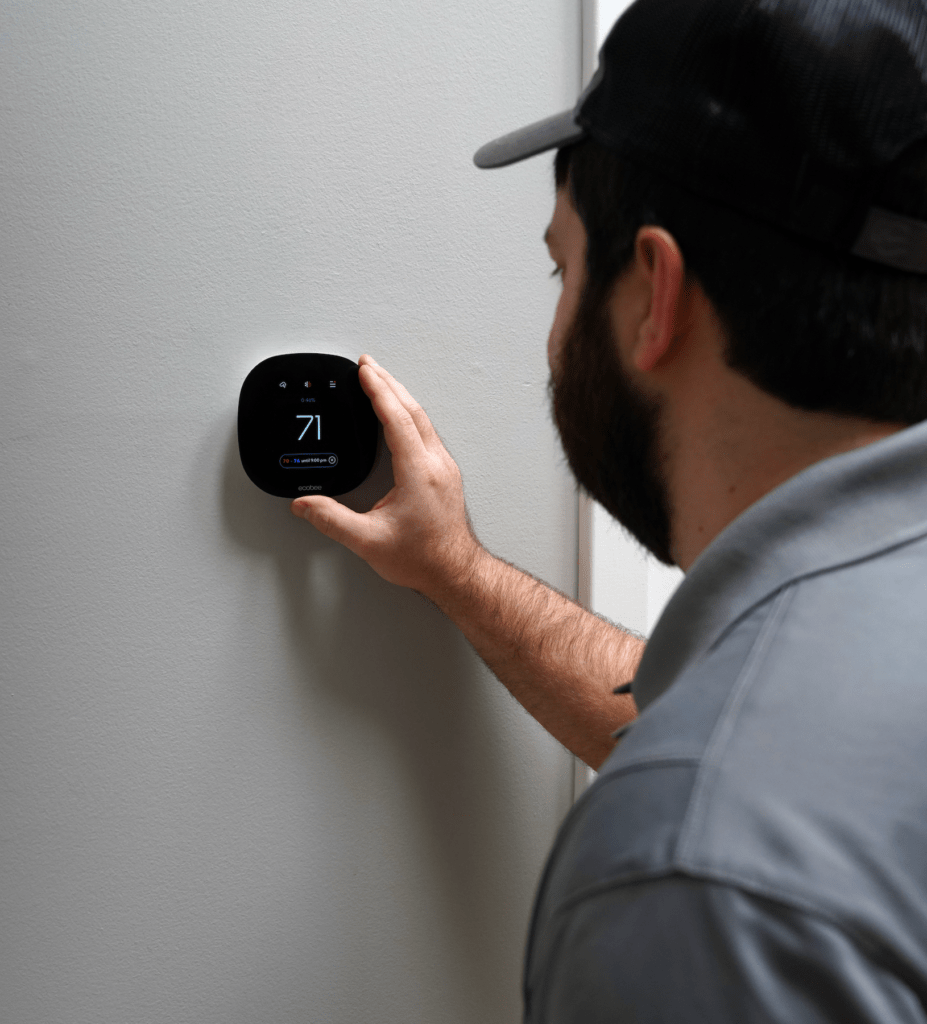
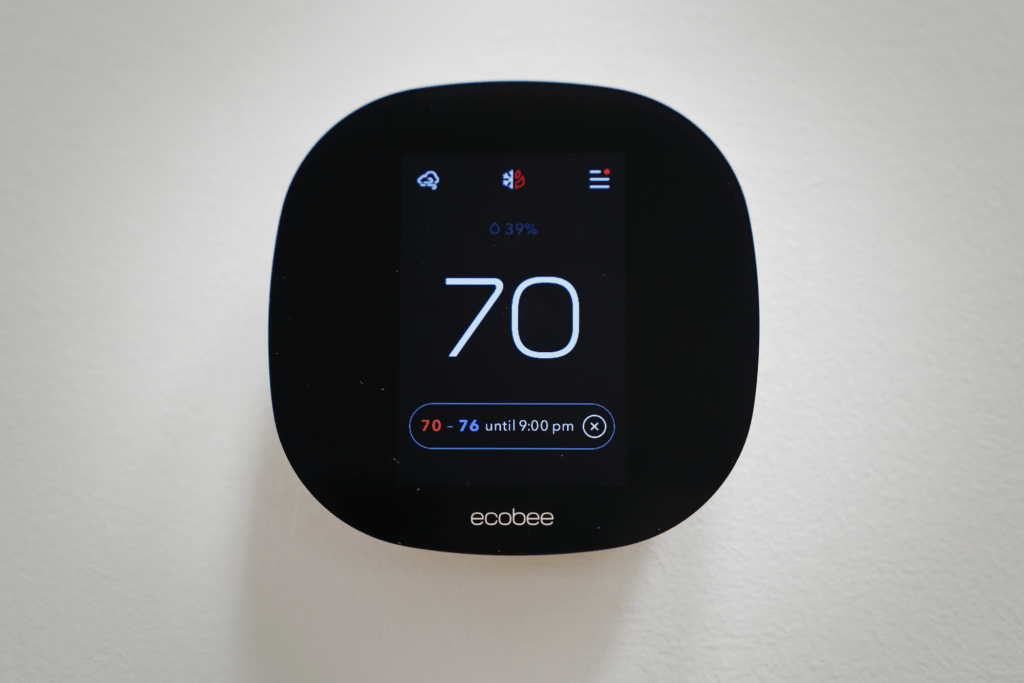
Tyler Heating & Cooling services all major brands of system controls, including smart thermostats. Our technicians are thoroughly trained to the highest standards in the industry, to ensure your home comfort needs.
Thermostat Replacement
One of the most significant advantages of a new or upgraded thermostat is improved energy efficiency. Modern smart thermostats learn your schedule and preferences, adjusting temperatures accordingly to minimize energy usage while ensuring your home remains comfortable. For Greater Lansing homeowners, this is especially valuable during the region’s long heating season, when smart thermostats can reduce unnecessary heating during mild periods and maximize efficiency during temperature swings.
Enhanced control is another key benefit. Many new thermostats come with mobile app connectivity, allowing you to monitor and adjust settings remotely. This means you can tweak your home’s temperature from anywhere, ensuring you return to a perfectly comfortable environment.
Smart thermostats often provide detailed energy reports, helping you understand your consumption patterns. This insight enables smarter decisions regarding heating and cooling, potentially leading to lower utility bills. Many new models also offer compatibility with smart home systems, enabling seamless integration and voice control.
Upgrading to a new thermostat can enhance the lifespan of your HVAC system by preventing unnecessary strain, ensuring it runs efficiently for years to come. Investing in a new thermostat can lead to greater comfort, substantial savings, and a reduced carbon footprint.
Thermostat Installation
A correctly installed thermostat by professional HVAC technicians ensures optimal temperature control, improving energy efficiency and enhancing comfort in residential or commercial spaces.
The installation process typically involves several key steps:
- Assessment: The technician evaluates the existing system and location for the new thermostat, considering factors like sun exposure and proximity to heating or cooling sources.
- Power Off: Safety is prioritized by turning off the HVAC system at the breaker to prevent electrical hazards during installation.
- Removing the Old Thermostat: The technician carefully detaches the old unit, noting the wiring connections to ensure proper installation of the new thermostat.
- Wiring: Following the manufacturer’s instructions, the technician connects the new thermostat’s wires to the corresponding terminals, ensuring secure and correct connections.
- Mounting: The new thermostat is mounted on the wall, ensuring it is level and securely fastened.
- Testing: Once installed, the technician powers on the HVAC system and tests the thermostat to ensure it controls the temperature correctly.
- User Instructions: Finally, the technician provides the homeowner or building manager with instructions on how to operate the new thermostat effectively.
With proper installation, the thermostat functions as intended, leading to enhanced comfort and energy efficiency.
Give us a call if your heating or cooling systems are acting up. It could be that system controls are the culprit. We’ll be happy to inspect the issue with our trained technicians, to ensure your home is providing the comfort you need.
Frequently Asked Questions
A non-responsive thermostat often indicates a dead battery, which is the first thing to check. Replace the batteries and allow 10 minutes for the unit to restart. If your thermostat is hardwired, verify the circuit breaker hasn’t tripped. Cold Michigan winters can sometimes strain electrical connections, so ensure all wiring at the unit is secure and free of frost buildup. If the thermostat screen is blank, check that your HVAC system’s power switch is in the “On” position.
Confirm your thermostat is set to the correct mode (“Heat” with temperature higher than current, or “Cool” with temperature lower) and not set to “Off.” Check that the system’s power switch is on and the circuit breaker hasn’t tripped. Inspect your outdoor unit for ice, debris, leaves, or grass clippings blocking airflow. Replace your air filter if it’s clogged, as this restricts airflow and reduces system capacity. For heating, verify the gas supply valve is open. For cooling, note that systems may cycle on and off when outdoor temperatures exceed 95 degrees. If the system still isn’t functioning after these checks, contact our technicians for an inspection.
Short cycling can result from a thermostat placed near a heat source, drafty area, or in direct sunlight, causing incorrect temperature readings. Relocate items blocking airflow around the thermostat and keep it away from vents, windows, and exterior walls. A dirty air filter also causes frequent cycling, so check and replace yours monthly during peak heating and cooling seasons. In Mid-Michigan’s humid summers, high moisture levels can affect how your system reads temperature. Ensure your thermostat is properly calibrated.
Inconsistent temperatures are often caused by closed or partially closed supply vents and registers in different rooms. Walk through your home and ensure all vents are fully open and unobstructed by furniture or curtains. A clogged air filter also reduces overall airflow, making temperature distribution uneven, so replace it regularly. In older Lansing-area homes, poor duct insulation in attics or crawl spaces can cause temperature drops.
Replace your thermostat if it won’t hold programmed settings or constantly loses battery power despite recent battery changes. If the display is cracked, unresponsive to button presses, or showing incomplete information, replacement is typically the best option. Older manual thermostats can’t take advantage of energy-saving features available with programmable or smart models suited to Mid-Michigan’s seasonal changes. If your thermostat is over 20 years old, upgrading to a modern unit will give you better control and potentially lower heating and cooling costs.
The fan setting controls how your system’s blower operates. “Auto” mode runs the fan only when heating or cooling is active, which is the most energy-efficient option for most Greater Lansing homes. “On” mode runs the fan continuously, which helps distribute air evenly throughout your home but uses more electricity. In dry Lansing winters, continuous fan use can feel uncomfortable, while in humid summers it may help with moisture control. Most homeowners find “Auto” provides the best balance of comfort and efficiency. Choose “On” only if you experience significant temperature variations between rooms.
Hold mode overrides your thermostat’s programmed schedule and maintains the current temperature setting until you manually change it or cancel hold mode. Hold mode is ideal for short-term adjustments, but remember to disable it to return to your normal schedule and avoid wasting energy. Most thermostats have an easy button or menu option to activate and deactivate hold.
The schedule feature lets you set different temperatures for different times of day and days of the week, automatically adjusting your system without manual changes. You can program lower temperatures for nighttime and when you’re away, then have the system bring your home to a comfortable temperature before you wake or return. This automation helps reduce energy waste throughout the heating and cooling seasons that dominate Mid-Michigan’s weather pattern. Most modern thermostats allow multiple temperature adjustments daily. Using a schedule typically reduces energy consumption by 10 to 15 percent compared to constant manual adjustments.
Central heating systems use a single thermostat to control one furnace or heat pump that distributes heated or cooled air through ductwork to your entire home. A central thermostat provides whole-house temperature control and is ideal for Greater Lansing homes with existing duct systems. Mini split systems have individual thermostats for each indoor unit, allowing you to set different temperatures in different rooms or zones. This zone control is useful in older Mid-Michigan homes without ductwork or for additions where extending ducts is impractical. Mini splits offer more precise temperature management and can reduce energy use in unused rooms, while central systems provide uniform comfort throughout your home with a single control point. Our technicians can recommend which approach best suits your home’s layout and heating and cooling needs.
Still have questions?
Give us a call
Highly-rated customer satisfaction