Why Are Ductless Mini Splits Important?
A ductless mini split is ideal for homes without existing ductwork, or for room additions and renovations where installing ducts is impractical. It’s especially valuable in the Greater Lansing area, where many homes were built before central air became standard, leaving renovations and additions without viable duct routes. Additionally, ductless mini splits are more energy-efficient and quieter than traditional central air systems, making them a great option for homeowners seeking a flexible and efficient cooling solution. Mini splits are also suitable for zones with different temperature requirements, as each unit can be controlled independently.
Ductless mini split systems are air conditioning and heating solutions that don’t require traditional ductwork. Here are the main types:
- Compact Mini Splits Smaller, lightweight units designed for tight spaces like RVs, tiny homes, or offices. Easy to install and relocate.
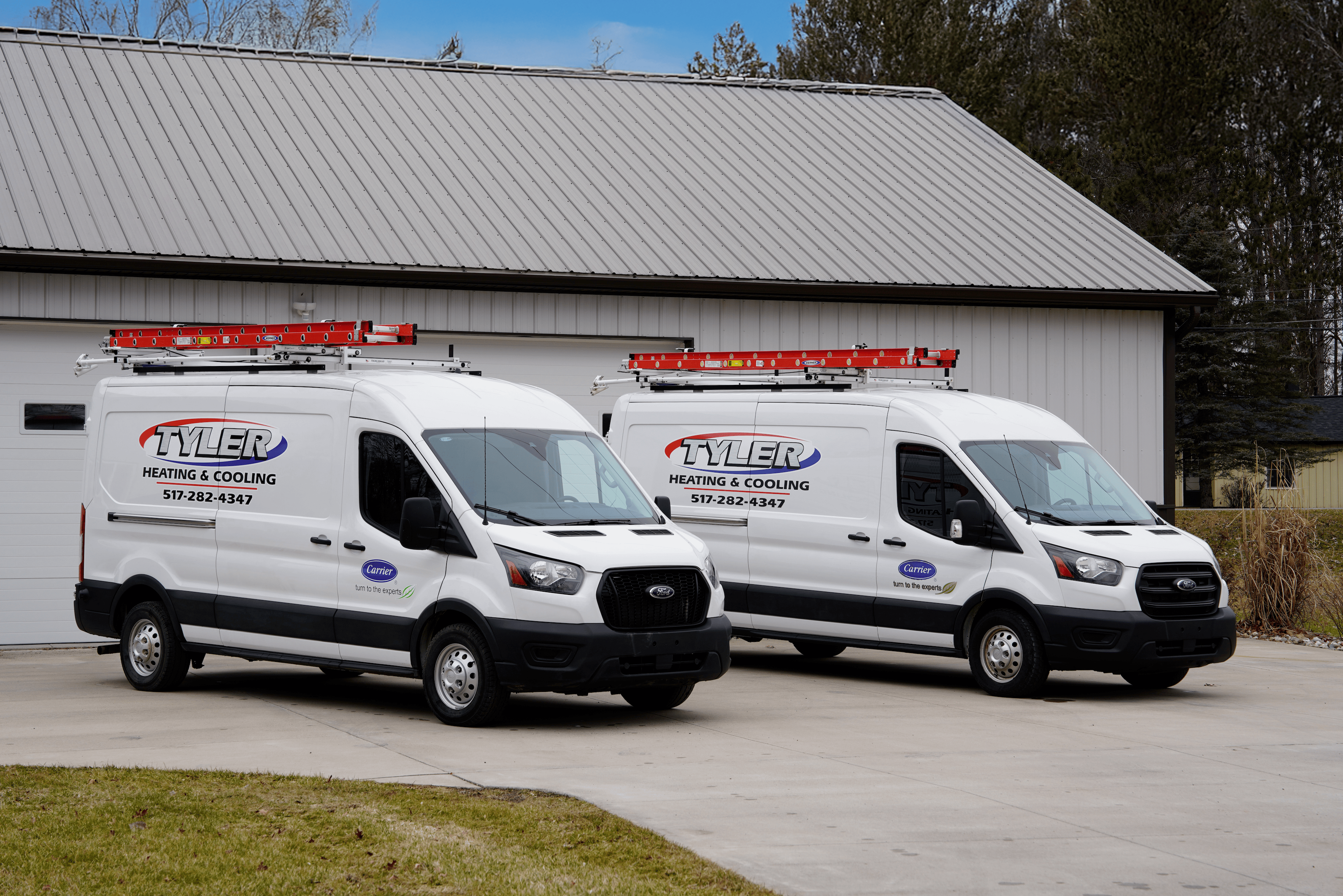
- Wall-Mounted Units The most popular type, mounted high on interior walls. They’re visible but sleek, offering efficient heating and cooling with minimal installation complexity.
- Ceiling-Mounted Units Suspended from ceilings, these units work well in spaces with limited wall area and provide even air distribution. They’re particularly useful in older Greater Lansing homes where wall space is limited or where wall-mounted units would interfere with radiators or historic fixtures.
- Floor-Standing Units Freestanding units that sit on floors, ideal for rooms without suitable wall space. They offer flexibility and portability compared to permanent installations.
Each type offers energy efficiency, quiet operation, and flexible zoning, making ductless systems an excellent alternative to traditional HVAC systems.
Ductless mini splits offer numerous benefits for heating and cooling homes and businesses:
- Easy Installation: Ductless systems require minimal installation compared to ducted systems. A small hole is made for the refrigerant line, resulting in less disruption to your space.
- Space-Saving Design: With indoor units mounted on walls or ceilings, they save floor space and can complement any decor.
- Easier Maintenance: Mini splits have simpler filter systems and require less maintenance than complex central air systems with extensive ductwork.
- Flexibility: Ductless mini splits come in various styles and capacities, making them suitable for diverse building types, from homes to commercial spaces.
- Energy Efficiency: Mini splits are highly efficient, often achieving higher SEER ratings compared to traditional HVAC systems. This can lead to lower energy bills.
- Quiet Operation: These systems are known for their quiet performance, making them ideal for bedrooms, offices, and other spaces where noise is a concern.
While central air works well for larger homes needing uniform cooling, mini splits excel in situations requiring flexibility, efficiency, and targeted comfort control. Overall, ductless mini splits offer a versatile, efficient, and convenient solution for climate control.
Contact us:
517-282-4347
Ductless Mini Split Repair
Ductless mini split systems offer efficient heating and cooling, but like any system, they occasionally need repairs.
- Compressor Failure: Often signaled by unusual noises or a lack of cool air, this is a more serious problem that may necessitate replacing the compressor or, in worst-case scenarios, the entire unit.
- Electrical Problems: A malfunctioning control board or faulty wiring can cause the unit to stop working or behave erratically. These issues typically require the expertise of a professional technician to diagnose and repair safely.
- Poor Airflow: The outdoor unit’s condenser coils can accumulate dirt and debris, impacting the system’s ability to cool. Regular maintenance, including cleaning these coils, can prevent such issues.
- Accessory Malfunction: Sometimes, the problem is as simple as a malfunctioning remote control or thermostat, which can often be resolved with a battery replacement or resetting the device.
Routine maintenance is key to preventing many of these problems. Scheduling regular check-ups with a qualified HVAC technician can ensure your ductless mini split system operates efficiently and has a long lifespan, minimizing the need for unexpected repairs.
Tyler Heating & Cooling’s professional technicians will inspect and diagnose any issues you may be experiencing with your ductless mini split unit. With their expertise, you feel confident about their recommendations for repair or replacement.
As an Official Carrier Dealer, Tyler Heating & Cooling is committed to installing quality, high-efficiency equipment that provides optimal longevity and long-term value.
Ductless Mini Split Replacement
Ductless mini split systems have become popular for their flexibility and efficiency in heating and cooling individual rooms or small spaces. However, over time, these systems can lose efficiency or fail to meet evolving comfort needs, making replacement a worthy consideration. Replacing an under-performing ductless mini split offers several substantial benefits that enhance both comfort and energy management.
Modern ductless mini splits incorporate advanced technology that significantly improves energy efficiency. New models use enhanced compressors, variable-speed fans, and smart thermostats, allowing for more precise temperature control and reduced energy consumption. By upgrading, homeowners can lower utility bills while minimizing their environmental footprint.
Some units may struggle to maintain consistent temperatures or produce unwanted noise. Replacement systems provide quieter operation, better air filtration, and more uniform heating or cooling. They also often include features like humidity control and programmable settings, which contribute to a more comfortable living environment tailored to user preferences.
As ductless mini splits age, their components wear out, which can lead to breakdowns or costly repairs. If that happens, it may be time to consider a replacement. New units come with warranties and improved durability, offering peace of mind and long-term savings.
Replacing a ductless mini split can transform your home’s heating and cooling experience by improving energy efficiency, comfort, and reliability. With advancements in technology and the added benefits of smart features, upgrading your system is a practical investment that delivers both immediate and long-term advantages.
Ductless Mini Split Installation
A ductless mini split system offers efficient heating and cooling without extensive ductwork. Here’s what to expect during installation:
- Preparation: Before scheduling your installation, determine the ideal location for indoor and outdoor units. Indoor units should be mounted on walls or ceilings in central locations for optimal air distribution. Outdoor units need adequate clearance and protection from debris. A professional technician will assess your home’s layout and cooling needs.
- Indoor Unit Mounting: The technician mounts the interior unit securely on the wall or ceiling in a central location for optimal air distribution. Proper mounting height ensures efficient operation and allows air to circulate throughout the room. The unit must be level and securely fastened to wall studs or structural supports.
- Outdoor Unit Placement: The outdoor condenser unit is installed on a stable, level surface away from obstacles. In Mid-Michigan, the location must allow for snow clearing during winter and protect the unit from ice damage. The outdoor unit should be elevated slightly to prevent water pooling during spring thaw common to our region. Adequate clearance is essential on all sides to prevent snow and debris from blocking airflow.
- Refrigerant Line Installation: Technicians run insulated refrigerant lines from the outdoor unit to the indoor unit through a small hole drilled in the wall or ceiling. For Greater Lansing homes, the hole placement must account for exterior wall composition and existing insulation. The refrigerant lines are carefully insulated and enclosed in protective tubing to prevent heat loss during Mid-Michigan winters. Proper installation prevents refrigerant leaks and maintains system efficiency through temperature extremes.
- Electrical Wiring: Electrical connections are made between the outdoor and indoor units, and the unit is connected to your home’s electrical system. All wiring is protected and run alongside refrigerant lines through the wall penetration or exterior conduit.
- Condensate Drainage: A condensate drain line is installed from the indoor unit to carry moisture outside. This is critical in Greater Lansing’s humid summers when significant water runoff occurs. The drain line is sloped properly to prevent water backup and is protected from freezing during our cold winters. In basement installations, the drain must account for potential water damage if flooding occurs.
- System Testing: Once all components are installed, the technician performs a comprehensive system test. This includes checking refrigerant pressure, verifying electrical connections, testing heating and cooling functions, and ensuring proper drainage.
Professional installation ensures proper calibration, warranty compliance, and adherence to local regulations. Most manufacturers require professional installation to validate warranties. Once installed, your mini split requires minimal maintenance. Cleaning filters monthly and having annual professional inspections helps maximize efficiency and lifespan.
For over 20 years, Tyler Heating & Cooling has been providing our community with efficient, quality service. We prioritize the care of our community’s home comfort needs.
Give us a call if you feel your ductless mini split may be in need of service, and we’ll be happy to provide you with our expert advice.
Frequently Asked Questions
Mini splits perform well in our climate but have reduced efficiency in temperatures below 20 degrees Fahrenheit. If heating is insufficient, ensure the outdoor unit isn’t heavily frosted or iced, which blocks airflow. Check that the thermostat is in heating mode and filters are clean. Some systems have auxiliary heat settings that activate during extreme cold, so verify this is enabled during our seasonal freeze periods.
Several factors can prevent cooling in our humid summers. Check that the thermostat is set to cooling mode and the temperature setting is lower than the current room temperature. Verify that the outdoor unit has proper airflow and isn’t blocked by dirt, leaves, or debris that’s common in our region. If these don’t resolve the issue, the system may require professional service.
Normal operation includes some sound from the compressor and fan, but unusual noises warrant investigation. Hissing or bubbling often indicates a refrigerant leak, while grinding or squealing suggests motor or bearing wear. Cold Michigan winters can cause expansion and contraction sounds as components adjust to temperature changes. If noise is new or increasing, contact a technician to prevent further damage.
Water leakage typically comes from a blocked condensate drain line. In Michigan’s humid summers, moisture accumulation is common. The drain line can become clogged with algae, dust, or debris. You can try clearing the drain opening at the unit’s base, but persistent leaks require professional attention to prevent water damage to your home or walls.
Most mini split repairs are economical, especially if the system is under 10 years old. However, if refrigerant has leaked, the compressor has failed, or multiple components are failing, replacement may be more cost-effective. Consider that newer systems operate better in our region’s temperature extremes and offer improved efficiency. A qualified technician can help you weigh repair costs against the benefits of a new system.
Yes, individual components can often be repaired or replaced. If your outdoor compressor fails, it can be replaced without replacing the entire system. Similarly, indoor air handlers can be serviced independently. However, if the refrigerant circuit is compromised or multiple parts are failing, replacing the matched pair system may be recommended for optimal performance and reliability.
Systems older than 12 to 15 years are approaching the end of their typical lifespan, especially in the Mid-Michigan where temperature swings stress equipment. Newer models offer better heating performance in our cold winters and higher seasonal efficiency ratings. If major components like the compressor or indoor blower need repair, replacement is often the better choice. A professional evaluation can help determine the most practical path forward.
A ductless system has an outdoor compressor connected to individual indoor air handlers that mount on walls or ceilings. Traditional central air requires ductwork throughout your home. Ductless systems are ideal for room-by-room comfort control, better for homes without existing ducts, and more energy-efficient since there’s no duct loss. They perform especially well in retrofits and additions where running ducts is impractical.
Mini splits use a reversible heat pump that can operate in both directions. In summer, the refrigerant absorbs heat from indoors and releases it outside. In winter, the process reverses: the refrigerant absorbs heat from outside air and releases it indoors. The reversible cycle makes mini splits practical for regions that experience both heating and cooling seasons like ours.
Regular maintenance ensures your system performs reliably through our demanding seasons. Replace or clean filters monthly during heating and cooling seasons, as the Lansing area’s dust and pollen can reduce airflow quickly. Have a professional inspect and clean the coils, drain line, and refrigerant levels annually, ideally before winter. Keep the outdoor unit clear of snow, ice, and debris throughout the year.
Yes, cleaning or replacing filters is a task most homeowners can handle monthly. Remove the filter from the indoor unit, which usually slides out easily, and clean it or replace it with a new filter. Greater Lansing’s seasonal changes mean filter maintenance is especially important during high-use periods in summer and winter. Allow filters to dry completely before reinstalling to prevent mold growth.
Schedule professional service at least once annually, ideally in fall or spring, before the harsh weather arrives. This allows technicians to address any issues ahead of when you’ll need the mini split most. Annual maintenance prevents costly breakdowns and maintains efficiency through seasonal temperature extremes.
Still have questions?
Give us a call
Highly-rated customer satisfaction
