Why Is Central Air Conditioning Important?
Summer brings the fun of outdoor activities and sunshine, but it also brings intense heat and humidity that can overwhelm your home. In Greater Lansing, this challenge is particularly acute. Our summers can push temperatures into the low 90s with humidity levels creating heat indices exceeding 100°F. Air conditioning is essential to keeping your home or business at a comfortable level during those heat waves, and it’s especially critical for managing the moisture that characterizes Mid-Michigan’s humid season.
Beyond comfort, a properly functioning central air conditioning system prevents serious issues common to our region. The combination of heat and high humidity creates conditions where older or undersized systems actually increase mold growth risk if dehumidification isn’t handled properly, a critical concern for Lansing-area basements and crawl spaces prone to moisture intrusion. Additionally, Greater Lansing’s transitional climate, with rapid temperature swings in spring and fall, puts significant stress on air conditioning systems. Units that aren’t properly sized for our specific climate zone often short-cycle (turn on and off frequently), wasting energy and wearing out prematurely.
Central air conditioning units come in several types, each designed to meet specific cooling needs and installation requirements. Here are the two main types:
- Split-System Air Conditioners: This is the most common type, consisting of two main components: an outdoor unit that houses the compressor and condenser, and an indoor unit that contains the evaporator coil and air handler. Split systems are efficient and provide effective cooling for homes of various sizes.
- Ductless Mini-Split Systems: These systems consist of an outdoor compressor and one or more indoor units connected by refrigerant lines. Ductless systems are perfect for homes without ductwork, providing flexibility in installation and zoning capabilities for different areas of the home.
Air conditioners come equipped with a variety of features designed to enhance comfort, efficiency, and convenience. Here are some key features commonly found in modern air conditioning units:
- Energy Efficiency: Many units boast high Energy Efficiency Ratio (EER) or Seasonal Energy Efficiency Ratio (SEER) ratings, indicating lower energy consumption and cost savings.
- Variable Speed Compressors: These allow the unit to adjust its cooling output based on the room temperature, providing consistent comfort and reducing energy use.
- Smart Technology: Wi-Fi connectivity enables remote control via smartphones or smart home systems, allowing users to adjust settings from anywhere.
- Air Purification: Advanced filters can trap dust, allergens, and pollutants, improving indoor air quality.
- Dehumidification: Many air conditioners come with a dehumidifying feature that removes excess moisture from the air, enhancing comfort during humid seasons.
- Programmable Thermostats: These allow users to set specific cooling schedules, optimizing comfort while minimizing energy waste.
- Quiet Operation: Designs that minimize noise levels ensure that the unit operates quietly, making it suitable for bedrooms and living spaces.
- Reversible Functionality: Some models offer both cooling and heating functions, providing year-round climate control.
- Auto-Restart: In the event of a power outage, this feature allows the air conditioner to automatically resume previous settings once power is restored.
- Multiple Fan Speeds: This feature allows users to select the desired airflow intensity for personalized comfort.
These features collectively enhance the functionality and user experience of air conditioning systems. Understanding the types of air conditioners and their features helps homeowners choose an air conditioner that aligns with their overall comfort needs.
Contact us:
517-282-4347
Central Air Conditioner Repair
If your air conditioner isn’t keeping up with the sweltering heat, it can start to feel pretty uncomfortable! Rest assured that Tyler Heating & Cooling’s expert staff has your air conditioning needs covered. If your air conditioner is showing any of the following signs, it may be time for service:
- Inadequate Cooling: If your AC is running but not effectively cooling your space, it could indicate a refrigerant leak (worsened by freeze-thaw expansion cycles in spring/fall), a dirty filter clogged with Lansing pollen, or a malfunctioning compressor struggling with oversized homes or poor ductwork efficiency.
- Strange Noises: Unusual sounds such as grinding, squealing, or clanking can signal mechanical issues. These noises might indicate loose parts or worn-out components stressed by our extreme seasonal transitions.
- Unpleasant Odors: A musty smell can suggest mold growth, while a burning smell may indicate electrical issues. Both require immediate attention.
- Frequent Cycling: If your AC turns on and off frequently (short cycling), it may be due to a faulty thermostat, oversized unit, or issues with airflow.
- Increased Energy Bills: A sudden spike in energy costs can indicate that your system is working harder than it should, possibly due to inefficiency or a malfunction.
- Water Leaks: Any signs of water pooling around your unit can point to a clogged drain line or a refrigerant leak.
- Thermostat Issues: If your thermostat doesn’t respond or provides inaccurate readings, it could hinder your unit’s performance.
During an inspection, our highly-skilled service technicians can determine if the issue is a simple fix, or a sign of a larger problem. They will evaluate the symptoms mentioned above to diagnose the issue, accounting for Greater Lansing-specific factors like seasonal refrigerant expansion, pollen buildup, and humidity-related corrosion. If your air conditioner is nearing the end of its life, and if you’ve been experiencing repeated issues, it may be time for a replacement.
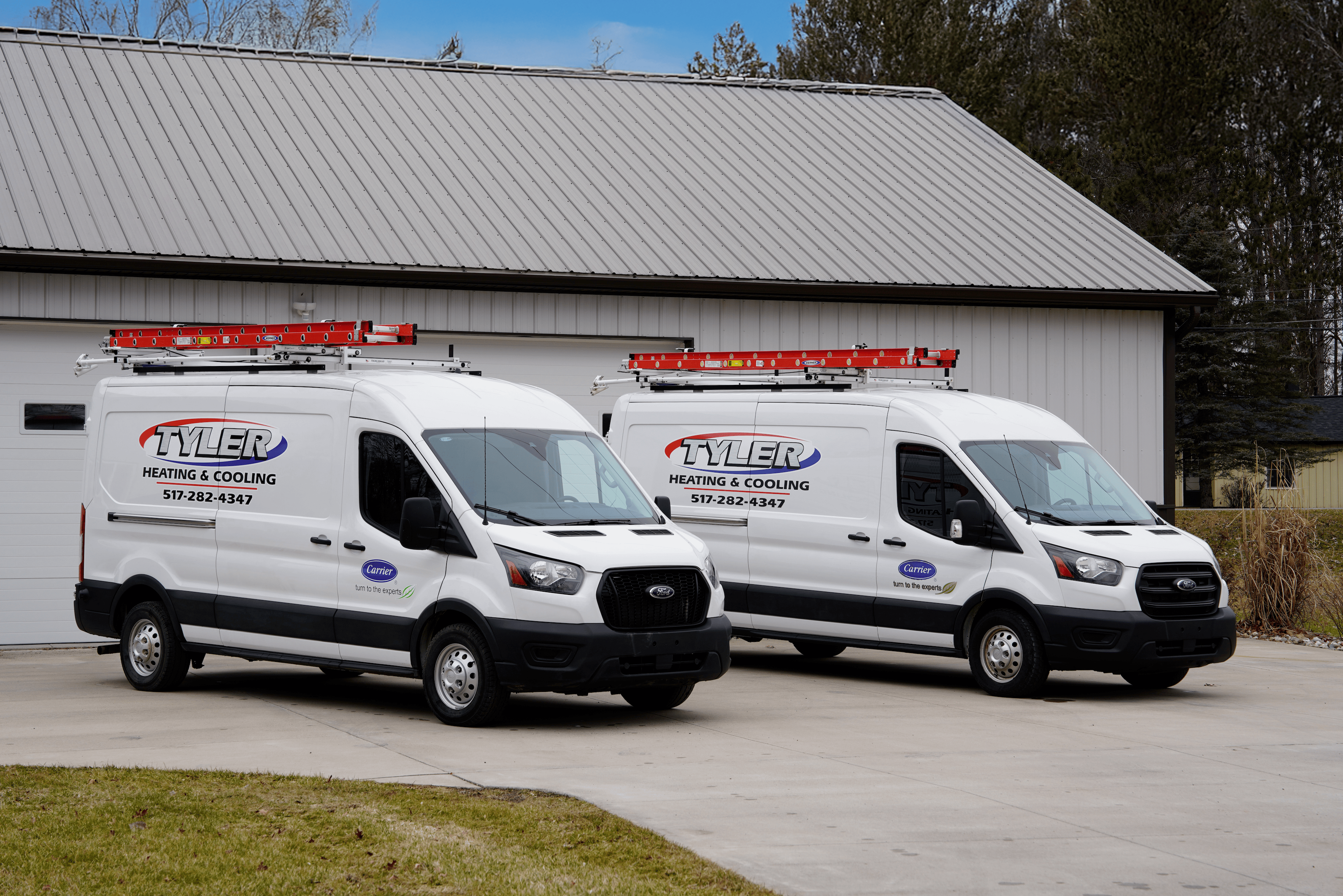
For over 20 years, Tyler Heating & Cooling has been providing our community with efficient, quality service. We prioritize the care of our community’s home comfort needs.
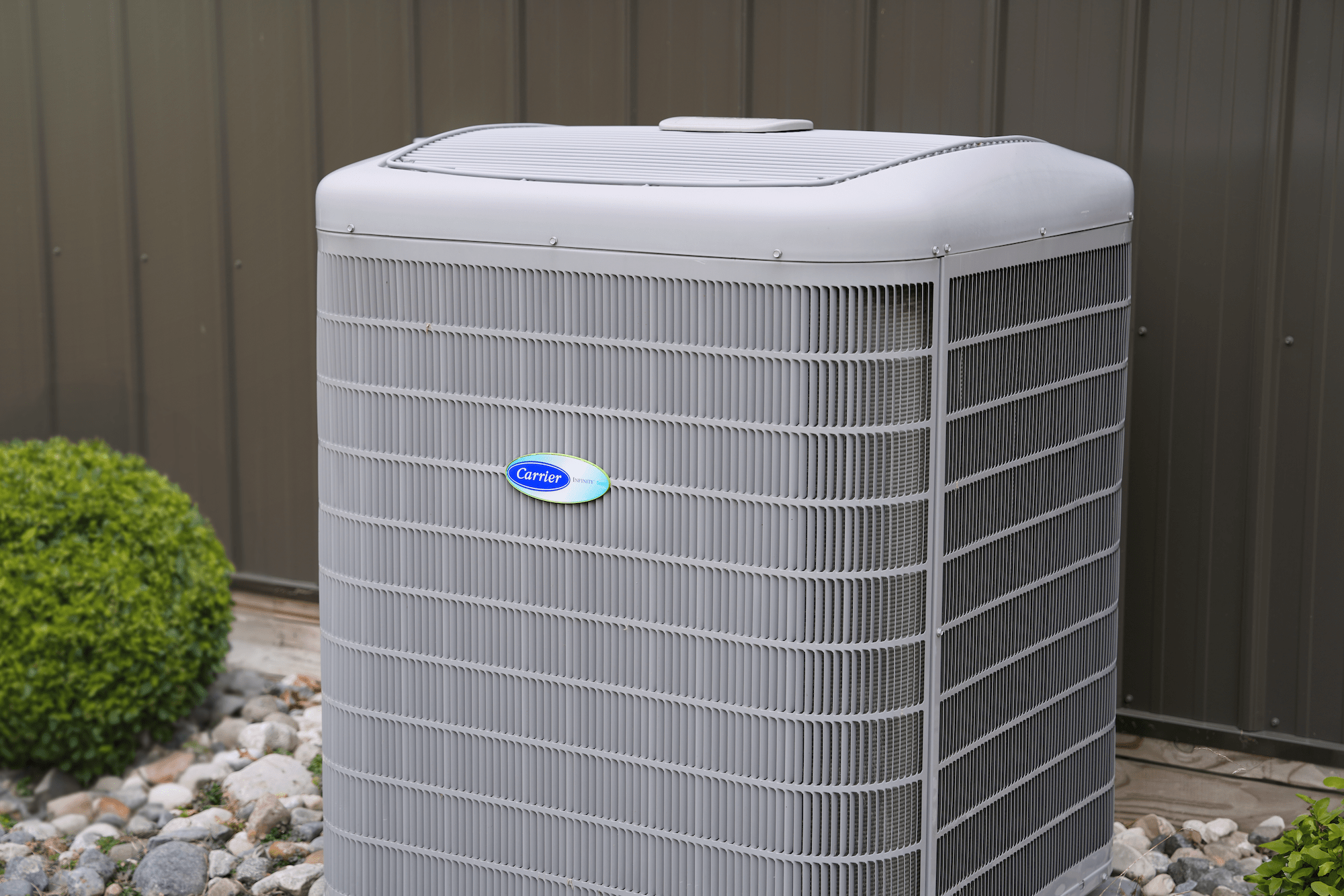
Tyler Heating & Cooling is an Official Carrier Dealer. We choose this brand for our air conditioning installations because of it’s long-standing reputation for quality.
Central Air Conditioner Replacement
Investing in a new air conditioner offers numerous benefits that enhance comfort, efficiency, and even health. Firstly, modern air conditioning units are designed with superior energy efficiency ratings, translating to lower utility bills. This is particularly advantageous during sweltering summer months when cooling demands peak.
New air conditioners often come equipped with advanced technology such as smart thermostats, allowing for better temperature control and scheduling. This feature is particularly valuable in Greater Lansing because it enables rapid adjustments during our rapid temperature swings. It optimizes energy consumption and provides convenience, as users can adjust settings remotely via smartphones.
Enhanced air quality is another compelling advantage. New models frequently include advanced filtration systems that effectively eliminate allergens, dust, and pollutants. This is crucial for those with allergies or respiratory issues, improving overall indoor air quality.
Noise reduction is a notable feature of contemporary units. Unlike older models, which can be disruptive, new air conditioners operate more quietly, promoting a peaceful environment.
The reliability of a new air conditioning system cannot be overstated. With warranties and modern engineering, these units require less frequent repairs and maintenance, offering peace of mind and consistent comfort. In summary, a new air conditioner is an investment that pays off through energy savings, improved air quality, enhanced comfort, and long-term reliability.
Central Air Conditioner Installation
A professionally installed central air conditioning system is key to maintaining consistent indoor comfort and energy efficiency in the Greater Lansing Area. Proper installation ensures your unit is correctly sized for Mid-Michigan’s specific climate challenges, ducts are optimized, and airflow is balanced throughout your home. This helps prevent common issues like uneven cooling, high energy bills, and premature system wear.
At Tyler Heating & Cooling, we follow a proven process to ensure every installation meets the highest standards of performance and safety.
- In-Home Consultation and Assessment: We begin with a detailed consultation to understand your cooling needs and preferences. During this visit, we assess square footage and layout, insulation and window placement, existing ductwork condition, electrical system capacity, and current HVAC equipment. Proper evaluation allows us to determine the ideal system size and configuration.
- Accurate Load Calculation: One of the most critical steps in AC installation is performing a load calculation. This determines how much cooling capacity your home requires. Installing a system that is too large or too small can cause serious efficiency and comfort issues. Our technicians calculate the appropriate system capacity to ensure optimal cooling without unnecessary energy consumption.
- System Recommendations: After completing our evaluation, we recommend central air conditioning systems that meet your home’s needs and budget. We explain efficiency ratings, available features, warranty coverage, and long-term operating costs so you can make an informed decision.
- Free Installation Estimate: We provide a clear, written estimate outlining equipment, labor, and installation details. There are no hidden fees. Our goal is to provide transparency and confidence before work begins.
- Professional Installation: Our licensed technicians handle every aspect of the installation process, including setting the outdoor condenser unit, installing or connecting the indoor evaporator coil, securing refrigerant lines, ensuring proper drainage, connecting electrical components, and integrating the thermostat. We follow manufacturer specifications and local building codes to ensure safe and reliable operation.
- System Testing and Final Inspection: Once installation is complete, we thoroughly test your new system. We check refrigerant levels, airflow, thermostat accuracy, and cooling performance. We also walk you through system operation and maintenance basics.
Tyler Heating provides expert central air conditioning installation designed to meet your home’s specific cooling needs. Our team focuses on precise setup, efficient performance, and long-term reliability, giving you peace of mind during the hottest months. Whether you’re replacing an outdated system or installing a new one, you can count on dependable service and lasting comfort.
Give us a call if you feel your air conditioner may be in need of service, and we’ll be happy to provide you with our expert advice.
Frequently Asked Questions
Most people find 72-78°F comfortable, though preferences vary. During Greater Lansing’s hot, humid summers, 75-76°F balances comfort with efficiency. Raising your temperature 7-10°F when away or sleeping can reduce cooling costs by 10-15% annually without sacrificing comfort when you’re home.
Running your AC at a consistent, comfortable temperature is more efficient than frequently adjusting it. Your system uses the most energy during startup, so letting it maintain your set temperature steadily saves money compared to repeatedly cycling it on and off throughout the day.
Change your AC filter every 1-3 months depending on usage and household conditions. In Greater Lansing, monthly changes are recommended if you have pets or allergies, since Michigan’s seasonal pollen and dust accumulation reduces filter efficiency more quickly. A clogged filter reduces cooling performance and can damage your system.
Replace filters regularly, seal air leaks around windows and doors, use a programmable thermostat, and keep your outdoor unit clear of debris and vegetation. During Lansing’s humid summers, closing blinds during the day reduces heat gain, and scheduling professional maintenance before cooling season ensures peak performance.
Common causes include a clogged filter, low refrigerant levels, thermostat set incorrectly, a frozen evaporator coil, or a dirty outdoor condenser unit. Start by replacing your filter and verifying your thermostat is set to cool mode with the temperature set below your current room temperature. If cooling doesn’t improve, contact a technician for diagnosis.
Blocked air vents, ductwork leaks, furniture restricting airflow, or insufficient sun exposure control can prevent even cooling. Rooms on the west or south side of homes in the Lansing area may need extra cooling during summer heat. Check that all vents are open, close blinds in sun-exposed rooms, and have a technician inspect ductwork if uneven cooling persists.
Grinding, squealing, or banging sounds indicate loose parts, worn bearings, debris, or refrigerant issues requiring professional inspection. Minor humming is normal, but unusual noises should be evaluated promptly to prevent component damage. Contact a local technician if you notice sounds you haven’t heard before.
Leaks develop from vibration creating holes in copper tubing, moisture causing corrosion, manufacturing defects, or physical damage. Refrigerant poses minimal risk to people in normal circumstances but can cause injury with large leaks in enclosed spaces. A leaking system wastes energy and eventually fails to cool your home and requires immediate professional repair.
Water leaking from your indoor unit typically indicates a clogged condensate drain line filled with algae, mold, or debris. You can often clear it yourself by flushing the PVC drain line located near your indoor unit with water or a wet/dry vacuum. If leaking continues after clearing the line, possible causes include a cracked drain pan, frozen coils, or low refrigerant, which require professional service.
If repair costs exceed 50% of replacement cost, replacement is usually more economical. Consider replacing systems that are over 15 years old, fail repeatedly, have become inefficient, or use outdated refrigerants. Newer systems operate more reliably and efficiently during Michigan’s hot, humid summers.
AC sizing is measured in tons (12,000 BTU equals 1 ton) and depends on your home’s square footage, insulation, window area, and sun exposure. A general estimate is 1 ton per 500-600 square feet, but Greater Lansing’s variable humidity and seasonal heat demands require professional load calculations for accuracy. An undersized system runs constantly in summer heat, while an oversized system wastes energy and fails to remove humidity properly.
SEER (Seasonal Energy Efficiency Ratio) measures cooling efficiency, with higher ratings indicating lower energy costs. Federal minimums are SEER 13, but modern units reach SEER 16-21 for better efficiency. In Michigan’s climate, higher-efficiency systems pay for themselves through reduced cooling costs over their lifetime.
Refrigerant is a chemical compound that circulates through your AC system, absorbing indoor heat and releasing it outdoors. Your sealed system contains a fixed refrigerant charge that lasts for the system’s lifespan. If refrigerant levels drop, a leak exists and requires professional repair with EPA-certified equipment.
Still have questions?
Give us a call
Highly-rated customer satisfaction
