What Are Heat Pumps?
A heat pump is a versatile system that transfers heat from one place to another, functioning effectively for both heating and cooling needs. In heating mode, it extracts heat from the outside air, ground, or water, even in cold conditions, and moves it indoors to warm your space. This process involves refrigerant, which absorbs heat and is compressed to increase the temperature before distribution through ducts or radiators.
In cooling mode, a heat pump removes heat from the indoor air and transfers it outside, providing a refreshing environment during warm weather. This dual functionality makes heat pumps highly efficient, utilizing less energy than traditional heating or cooling systems.
Heat pumps are also known for their environmental benefits. By leveraging renewable energy sources, such as the ambient air or ground temperature, they can significantly reduce greenhouse gas emissions compared to fossil fuel-burning systems. Additionally, many modern heat pumps are equipped with advanced technology, like variable-speed compressors, enhancing their efficiency and comfort control.
Advanced design and technology reduce noise levels, making heat pumps quieter than conventional heating systems. With proper maintenance, heat pumps can last over 15 years, providing a long-term heating and cooling solution. These features make heat pumps an increasingly popular choice for Greater Lansing homeowners.
There are several types of heat pumps, each suited to different applications and environments:
- Air Source Heat Pumps: These are the most common type, extracting heat from the air outside and transferring it indoors. They can also work in reverse to cool homes in the summer. Air source heat pumps are relatively easy to install and operate efficiently in moderate climates. For Greater Lansing properties, proper sizing is critical because the system must handle our intense winter heating demands while remaining cost-effective.
- Ductless Mini-Split Heat Pumps: Ideal for homes without ductwork, these systems consist of an outdoor unit connected to one or more indoor units. They provide zoned heating and cooling, allowing for customized comfort levels in different areas of the home.
- Ground Source Heat Pumps (Geothermal): These systems utilize the stable temperature of the ground to provide heating and cooling. They bury pipes underground, circulating a fluid that absorbs heat from the ground in winter and dissipates heat in summer. Geothermal systems are energy-efficient and have a long lifespan but require a higher initial investment.
- Water Source Heat Pumps: Similar to ground source systems, these heat pumps draw heat from a body of water, such as a lake or well. They are effective in areas with a reliable water source and can also provide both heating and cooling.
- Hybrid Heat Pumps: These systems combine a heat pump with a traditional heating system, like a furnace. The hybrid approach allows the system to switch between the heat pump and furnace depending on the outdoor temperature, optimizing efficiency and comfort.
Heat pumps are rapidly gaining popularity as an efficient solution for heating and cooling homes. Overall, a heat pump serves as a sustainable and cost-effective solution for year-round climate control in homes and commercial spaces.
Contact us:
517-282-4347
Heat Pump Repair
When your heat pump starts showing signs of trouble, it’s essential to act quickly to avoid further damage. Here are some key indicators that you may need to schedule a repair:
- Unusual Noises: Hearing grinding, rattling, or hissing sounds can indicate mechanical issues or loose components that need attention.
- Insufficient Heating or Cooling: If your heat pump isn’t effectively heating or cooling your space, it may be struggling with its compressor, refrigerant levels, or airflow.
- Increased Energy Bills: A sudden spike in your energy costs suggests that your heat pump is working harder than normal, possibly due to inefficiencies or malfunctioning parts.
- Frequent Cycling: If the system is turning on and off more frequently than usual, it might be overheating or facing a thermostat issue.
- Foul Odors: Unpleasant smells, especially burning or mildew, can indicate electrical problems or mold growth within the unit.
- Ice Buildup: Ice forming on the outdoor unit in mild weather can signal refrigerant issues or airflow restrictions.
- Poor Airflow: Weak airflow from vents can be a sign of duct blockages, a failing blower motor, or a dirty air filter.
Since they provide heating and cooling to your home or business, it’s critical to ensure your heat pump is functioning properly. Tyler Heating & Cooling’s expert professionals will make sure your needs are met.
During an inspection, our highly-skilled service technicians can determine if the issue is a simple fix, or a sign of a larger problem. They will evaluate the symptoms mentioned above, to diagnose the issue. If your heat pump is nearing the end of its life, and if you’ve been experiencing repeated issues, it may be time for a replacement.
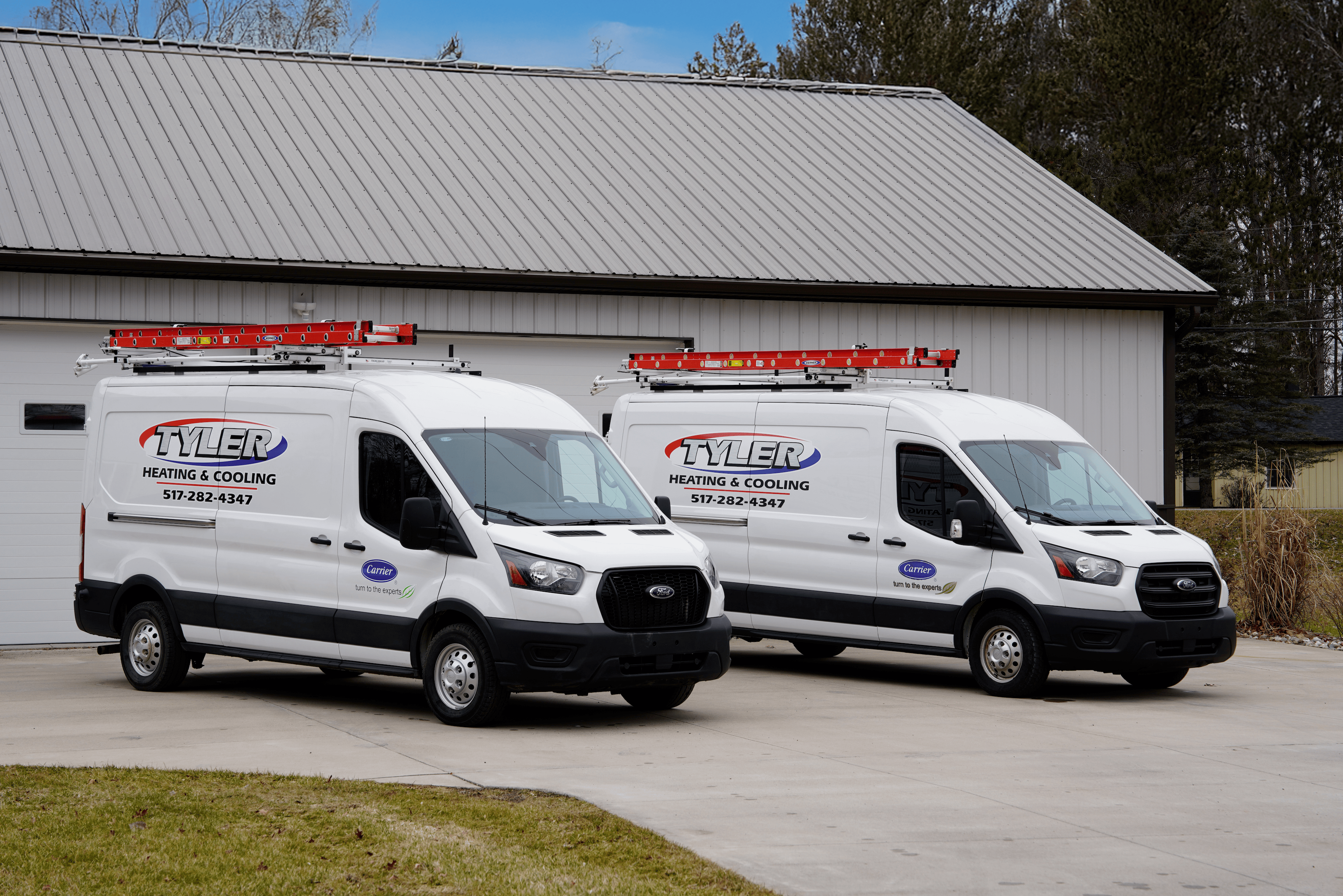
For over 20 years, Tyler Heating & Cooling has been providing our community with efficient, quality service. We prioritize the care of our community’s home comfort needs.
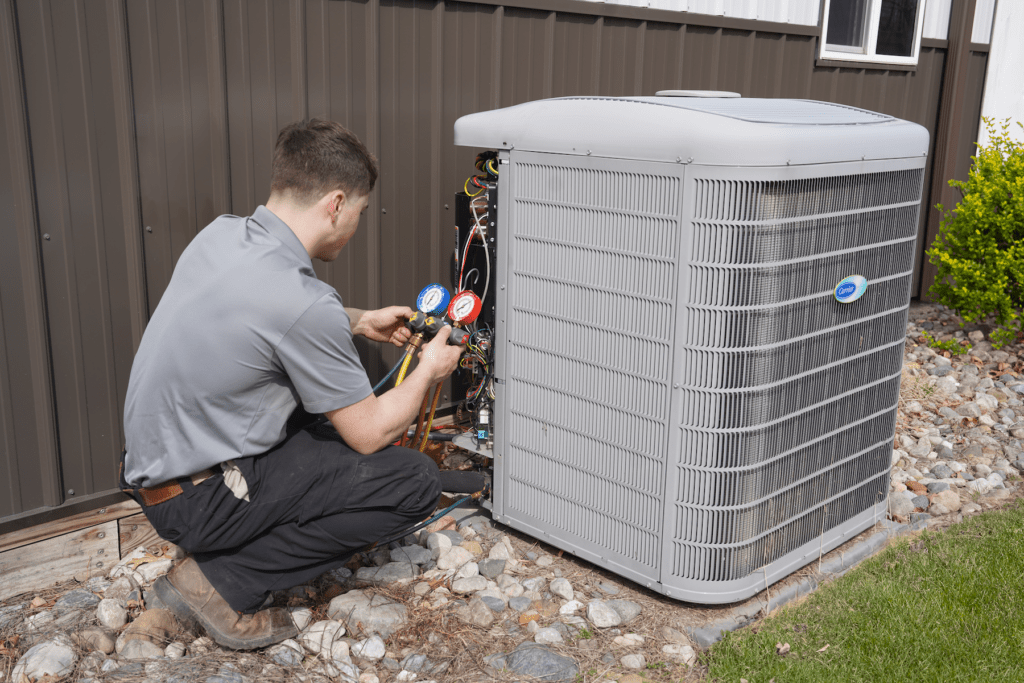
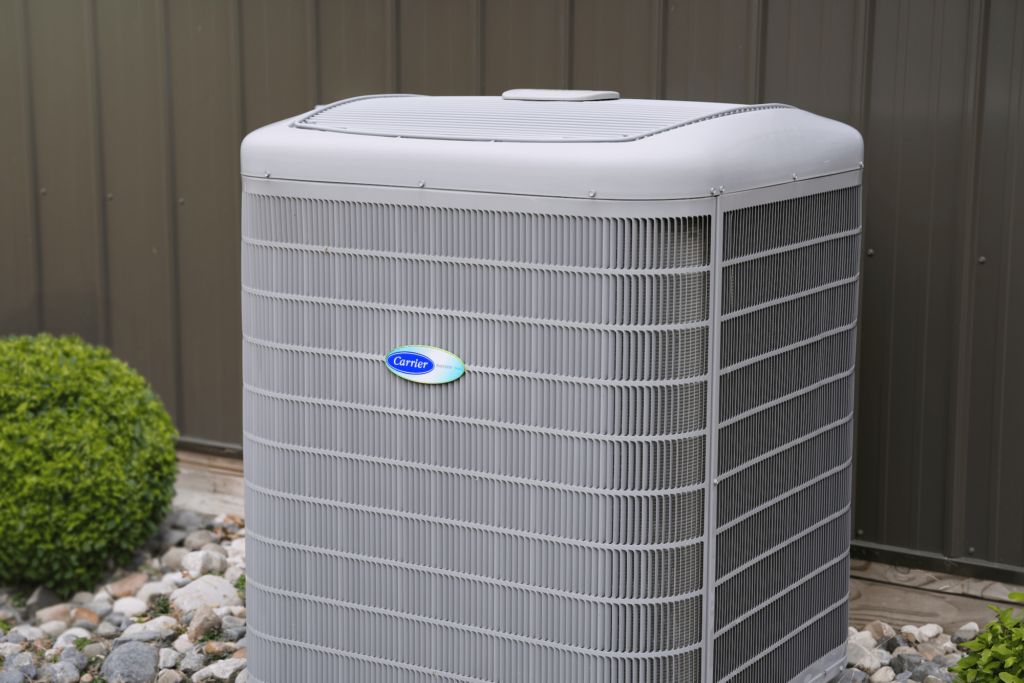
Tyler Heating & Cooling installs and repairs high-efficiency heat pumps, a popular choice because of their dual heating and cooling capabilities.
Heat Pump Replacement
One of the primary benefits of a new heat pump is its energy efficiency. Compared to traditional heating systems, heat pumps can transfer more energy than they consume, often achieving efficiencies of 300% to 400%. This leads to lower energy bills and reduced environmental impact.
Another advantage is versatility. Because heat pumps can both heat and cool spaces, they are a year-round climate control solution. This dual functionality is particularly valuable in Greater Lansing, where the heating season spans six months and summer cooling demands are substantial.
Advancements in technology have improved the performance of heat pumps in colder temperatures, making them a viable option even in regions with harsh winters. Many units now come equipped with smart technology, allowing homeowners to monitor and control their systems remotely for enhanced convenience.
Using a heat pump can potentially qualify homeowners for government incentives or rebates focused on energy efficiency, making it a financially savvy choice. Overall, the benefits of new heat pumps present a compelling case for integrating them into modern home heating and cooling systems.
Heat Pumps Installation
Heat pump installation is an efficient way to provide both heating and cooling for your home using a single system. Heat pumps work by transferring heat rather than generating it, making them an energy efficient option for maintaining indoor comfort throughout the year. Choosing the right heat pump depends on factors such as your home size, climate, and existing HVAC setup.
The experienced team at Tyler Heating & Cooling ensures every heat pump installation is completed with precision and care. From proper system sizing to correct placement and connection, each step is handled to maximize efficiency, performance, and longevity. A professionally installed heat pump can help reduce energy costs while delivering consistent temperature control in every season. Here’s an overview of our heat pump installation process:
- Assessment: We start with a comprehensive site assessment, evaluating your home’s square footage, insulation, ductwork, and heating and cooling demands. This determines proper system sizing. Based on these findings, we recommend the right heat pump type: a central air-source system, ductless mini-split for homes without adequate ductwork, or geothermal if your property is suitable. If your home uses ductwork, we inspect for leaks and blockages, sealing or modifying as needed.
- Unit Installation: We position your compressor unit on level, well-draining ground with adequate clearance and minimal exposure to winter wind and road salt spray. These placement decisions directly impact your system’s longevity and performance in our climate. We connect your air handler to the ductwork or mount wall units in key areas of your home for optimal air distribution in both heating and cooling modes.
- Connections: We install insulated copper refrigerant lines between your outdoor and indoor units and pressure test all connections before charging your system to prevent leaks. Our licensed technicians wire your heat pump to your electrical panel with appropriate circuit breakers and safety disconnects per current code requirements.
- Thermostat Installation: We install a programmable or smart thermostat configured for our region’s heating and cooling demands, including supplemental heat activation settings tailored to our climate patterns.
- Final Testing: We verify all functions in both heating and cooling modes, confirm proper refrigerant charging, check for leaks, and validate airflow. Lastly, we walk homeowners through usage of the new unit and answer any remaining questions, for complete confidence in the new heat pump.
With the right installation, a heat pump provides reliable comfort, improved energy efficiency, and a more environmentally friendly solution for your home.
Give us a call if you feel your heat pump may be in need of service, and we’ll be happy to provide you with our expert advice.
Frequently Asked Questions
Heat pumps naturally produce some operational sounds, but sudden changes often indicate service needs. In winter months, you may hear refrigerant flowing or the compressor cycling more frequently due to colder outdoor temperatures. Hissing sounds suggest potential refrigerant leaks, while grinding or squealing typically points to motor or fan issues. Loud banging during the defrost cycle is common but should be evaluated if it intensifies.
Several factors affect heating performance during our cold Lansing area winters. First, verify your thermostat is set to heat mode and the temperature setting is appropriate. Heat pumps heat more gradually than furnaces, so patience is important when the system starts. Low refrigerant levels, dirty filters, or frost buildup on outdoor coils will reduce efficiency. On extremely cold days below 10 degrees Fahrenheit, your system may activate supplemental electric heat, which is normal operation. If your home stays consistently cold, have your system inspected.
Some frost on your outdoor unit is normal in Mid-Michigan winter conditions, but excessive ice indicates a defrost cycle problem. Heat pumps automatically switch to defrost mode to melt ice buildup, but if this cycle isn’t working properly, your system loses heating capacity. Low refrigerant, a faulty reversing valve, or a stuck thermostat can prevent defrost activation. Frozen coils reduce efficiency and can damage your compressor.
Clogged filters can restrict airflow and reduces cooling capacity. Ensure your outdoor unit has at least two feet of clearance and isn’t blocked by leaves, grass, or debris that accumulated through spring. Low refrigerant levels, frozen indoor coils, or a malfunctioning compressor will prevent adequate cooling. If your home feels warm and humid despite the system running, our technicians can check refrigerant levels and inspect your coils for frost buildup or blockages.
Short cycling, when your system starts and stops repeatedly, often results from thermostat placement in direct sunlight, near heat sources, or drafty areas in your Greater Lansing home. An oversized or undersized system can also cause this issue. Dirty air filters restrict airflow and trigger the system to restart more often. Low refrigerant levels or indoor coil ice buildup may cause the compressor to shut down for protection. A professional inspection will identify the specific cause and recommend adjustments.
This typically indicates a problem with your dampers or airflow control system. Reverse dampers help heat pumps switch between heating and cooling, and if they malfunction, you may feel cold air indoors during heating mode. Check that your vents aren’t blocked by furniture or curtains. Ensure your thermostat fan is set to “auto” rather than “on” during heating season. If you consistently feel cold outdoor air, our technicians can inspect your damper operation.
Age is a primary factor: heat pumps typically last 10 to 15 years in the Greater Lansing climate. If your system is under 10 years old and repair costs are below 50 percent of replacement cost, repairs usually make sense. However, if multiple components are failing, frequent service calls are needed, or your system is nearing the end of its lifespan, replacement becomes more practical. Consider your system’s efficiency rating as well; older units operate at significantly lower efficiency than modern models.
Both heat pumps and ductless mini splits operate on the same heat pump principle, moving heat rather than generating it, but they distribute air differently. Central heat pumps use existing ductwork to distribute heated or cooled air throughout your home, making them ideal for most Greater Lansing properties with established duct systems. Ductless mini splits consist of an outdoor unit connected to individual indoor wall-mounted units via refrigerant lines, eliminating the need for ductwork. Both systems perform effectively when properly sized and maintained.
The defrost cycle allows your heat pump to temporarily reverse and melt frost and ice from the outdoor coil during winter. When ice accumulation reduces airflow, the system automatically switches to cooling mode, directing hot refrigerant to the outdoor coil. This cycle typically lasts 10 to 15 minutes and repeats as needed. During defrost, you may notice your indoor unit temporarily blowing cool air or your backup heating activating. In our region’s winter climate, your system may run defrost cycles multiple times daily on humid, cold days. This cycle is critical for maintaining heating capacity throughout the season.
Annual maintenance performed in the spring or fall, keeps your system running efficiently through the harsher seasons. Service includes cleaning or replacing air filters, inspecting and cleaning indoor and outdoor coils, checking refrigerant levels, testing the reversing valve, lubricating fan motors, and verifying thermostat operation. Regular maintenance extends system life, maintains efficiency, and prevents unexpected failures.
Still have questions?
Give us a call
Highly-rated customer satisfaction